

Blockchain architecture is the underlying structure and design of a blockchain network. It refers to the various components and layers that make up a blockchain and how they function together to enable the secure and transparent recording of transactions on a decentralized platform.
A blockchain is a decentralized, distributed ledger that allows multiple parties to record transactions on a secure and transparent platform. It consists of a chain of blocks, where each block contains a record of multiple transactions. The blocks are linked together in a chronological order, forming a permanent record of all the transactions that have taken place on the network.
The blockchain architecture consists of several layers, each of which serves a specific purpose and contributes to the overall functioning of the network. These layers include:
- Application layer: This is the topmost layer of the blockchain architecture, which is visible to the users. It consists of the user interfaces, such as web or mobile applications, that allow users to interact with the blockchain and access the services it provides.
- Middleware layer: The middleware layer sits between the application layer and the core blockchain layer. It consists of various software programs and protocols that enable the integration of the blockchain with other systems and applications. This layer is responsible for enabling the communication between the various components of the blockchain network.
- Core blockchain layer: The core blockchain layer is the heart of the blockchain architecture. It consists of the blockchain itself, which is a decentralized, distributed ledger of all the transactions that have taken place on the network. The blockchain is maintained by a network of nodes, which are computers that validate and record transactions on the ledger. The core blockchain layer also includes the consensus mechanism, which determines how new transactions are added to the blockchain and how conflicts are resolved.
- Network layer: The network layer is the foundation of the blockchain architecture. It consists of the underlying infrastructure, such as the internet and telecommunications systems, that enable the communication and exchange of data between the various components of the blockchain network.
In summary, a blockchain is a complex system that consists of multiple layers that work together to enable the secure and transparent recording of transactions on a decentralized platform. It allows multiple parties to collaborate and conduct transactions without the need for a central authority, enabling greater security, transparency, and efficiency.
The application layer provides the user interface, the middleware layer enables the integration of the blockchain with other systems, the core blockchain layer consists of the decentralized ledger and the consensus mechanism, and the network layer provides the underlying infrastructure for communication and data exchange.
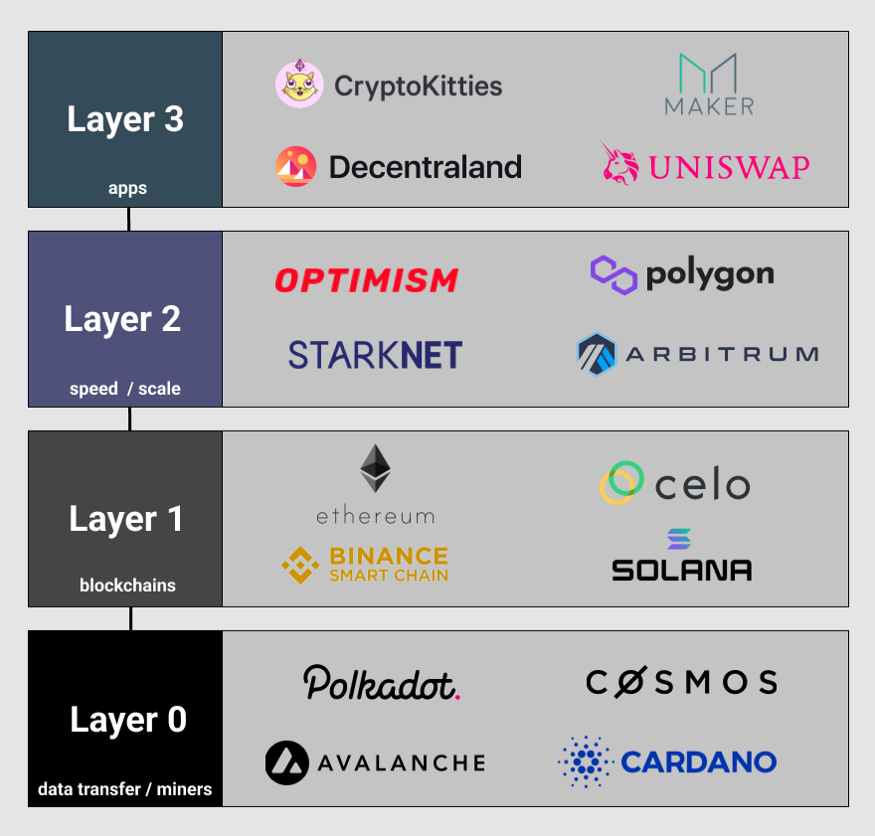
Now that you have learned about the Blockchain layers, let's dig a level deeper. These layers are often referred to as “layer 0” through “layer 3,” with layer 0 being the lowest layer and layer 3 being the highest. Lets understand their individual meaning,
Layer 0 Blockchain
This is the foundation of the blockchain architecture. It consists of the underlying infrastructure, such as the internet and telecommunications systems, that enable the communication and exchange of data between the various components of the blockchain network.
Layer 1 Blockchain
The layer 1 consists of the core blockchain layer, which is the heart of the blockchain architecture. It consists of the blockchain itself, which is a decentralized, distributed ledger of all the transactions that have taken place on the network.
The blockchain is maintained by a network of nodes, which are computers that validate and record transactions on the ledger. The core blockchain layer also includes the consensus mechanism, which determines how new transactions are added to the blockchain and how conflicts are resolved.
Layer 2 Blockchain
The layer 2, or the middleware layer, sits between the core blockchain layer and the application layer. It consists of various software programs and protocols that enable the integration of the blockchain with other systems and applications. This layer is responsible for enabling the communication between the various components of the blockchain network.
Layer 3 Blockchain
The layer 3, or the application layer, is the topmost layer of the blockchain architecture, which is visible to the users. It consists of the user interfaces, such as web or mobile applications, that allow users to interact with the blockchain and access the services it provides.
We can also say,
The layer 0 provides the underlying infrastructure, the layer 1 consists of the decentralized ledger and the consensus mechanism, the layer 2 enables the integration of the blockchain with other systems, and the layer 3 provides the user interface.
In summary, the blockchain architecture consists of multiple layers that work together to enable the secure and transparent recording of transactions on a decentralized platform.
https://medium.com/@learnwithwhiteboard_digest/what-is-blockchain-layer-0-1-2-3-explained-56226d4bb2cd


All Comments