


You’ve probably read about the meaning and even origin of the term Metaverse, but do you know the historical roots? Have you heard about the involvement of LucasArts? Yes, the first attempt of a virtual community was already made back in 1985.
Let’s dive deep into the history of Metaverse.
Table of contents
- Origin of the term Metaverse
- Habitat (1986)
- Active Worlds (1995)
- The Palace (1995)
- Habbo (2000)
- Second Live (2003)
- Open Source Metaverse Project (2004)
- Conclusion
Origin of the term Metaverse
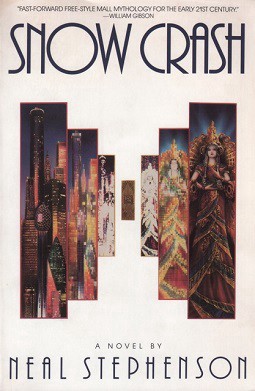
When researching the history of Metaverse, one inevitably comes across the origin of this very term. Neal Stephenson published his novel “Snow Crash” in 1992 and drew a fictional picture of the future using the term Metaverse for the first time — Meta (from the greek meta, “after” or “beyond”) combined with Verse from universe.
The book is fundamentally about a future anarcho-capitalist dystopia in which the characters repeatedly escape from reality into the Metaverse, which is a hybrid of the internet and a massively multiplayer online role-playing game (MMORPG) through which they move with avatars.
Habitat (1986)
However, the history of Metaverse from a technical point of view goes back even further. Long before Neal Stephenson coined the term, the MMORPG “Habitat”, initially created in 1985, was considered the first Metaverse. Habitat is a multiplayer online role-playing game developed by LucasArts. It was the first attempt at a large-scale to create a commercial virtual community that was graphics-based. Promotional video of Habitat by LucasFilm’s (1986)
The game was made available as a beta test in 1986 by Quantum Link, an online service for the Commodore 64 and the corporate precursor to AOL. Unlike other online communities at that time (MUDs and Massively Multiplayer Onlines with text-based interfaces), it is considered a precursor to modern online multiplayer worlds (MMORPGs). Habitat had a graphical user interface and a large user base. Users in the virtual world were represented by onscreen avatars. Those elements have made Habitat a much-cited project and a reference of today’s online communities with their immersive elements.
Unlike todays Metaverse and the immersive presence as it’s key element, users in the Habitat had a third-person perspective of themselves, making it rather like a videogame. Players could see and interact with each other in so called regions. Those regions were preset virtual environments, such as a beach, cave, suburb and could be entered or left by users at any time. Communication took place via onscreen text output.
In order to overcome broadband limitations at that time the client-software, that was running on Commodore 64, provided the user interface and generated a real-time animation of the Habitat world. It translated input from the player into messages and communicated them via modem and telephone over a commercial packet-switched network to the host, a central mainframe. The host maintained the world model and informed each player’s client about the constantly changing state of the world. A remarkable technical achievement at that time.
The wide range of possible interactions of the avatars in the Habitat led to some initial concerns. Because users themselves were responsible for acceptable behavior and compliance with certain basic moral rules. Avatars had to trade resources in Habitat and could even be robbed or “killed” by other avatars. Initially, this led to chaos in Habitat. As a result, rules, regulations and even authority avatars were introduced to maintain order.
Habitat ran from 1986 to 1988, and was closed down at the end of the pilot run. The service proved too costly to be viable, so Lucasfilm Games recouped the cost of development by releasing a sized down version called Club Caribe on Quantum Link in 1988. It was then licensed by Fujitsu in 1988, and released in Japan as Fujitsu Habitat in 1990.
An effort is currently underway to relaunch Habitat under MIT license as NeoHabitat.
Active Worlds (1995)
From the mid-1990s, cheaper and more widespread Internet access favored online platforms for building virtual worlds that were as realistic as possible by that time. One of them is ActiveWorlds.
Exploring an abandoned1990s online world
ActiveWorlds allows users to own worlds and universes, and develop custom 3D content. The software supports web browsing capabilities, voice chat, and basic instant messaging. Users have to pay a yearly citizenship fee.
Although it was released already 27 years ago, it has survived its bumpy history and is currently still active and accessible. The last current stable release 8.1 was published on 22nd of May 2022.
The Palace (1995)
The software concept of The Palace was produced by Time Warner in 1994, and was first opened to the public in November 1995. It offers graphical chat room servers, called palaces, in which users may interact with one another.
The Palace— Early Internet Chat Room (1997)
Each room in a palace is represented by a large image that serves as a backdrop for users. By clicking on specific areas in a room called “doors”, users can travel either to other rooms in the same palace, to another palace server or to an address that leads to another service, these can also be external websites and emails. In some rooms, users can paint on the backdrop of the room using a simple set of drawing tools. Apart from that communication happens via chat messages. These appear as chat bubbles above their avatar, similar to comic books, and are stored in a chat log.
The palace has an avatar system that allows users to combine small, partially transparent images. Once a member creates an avatar, they can choose different clothing or other accessories. By default, users are represented by spherical smiley emoticons, but they can also wear up to nine separate bitmap images called “props.”
One of the special features of The Palace for the time was that the server software was provided free of charge and ran on private PCs rather than being housed in a central location.
A comprehensive psychological studies of Avatar communities — the first of it’s kind — , conducted by John Suler, took place at The Palace. This collection of essays, entitled Life at the Palace, consists of an analysis of the Palace’s history, social relationships, “addiction,” and deviance. Suler’s work focused on the particular aspects of interaction via avatars and in a graphic space.
While there is no longer any official support for the original program, a new client has been developed and is actively maintained. Many chat servers are still operating and can be found on The Palace Portal Live Directory.
Habbo (2000)
Habbo (also named Habbo Hotel or HH) is an online community for young people aged 12 to 18, who actually make up about 90% of the users. Habbo was founded in 2000. It combines chat, interaction and online game elements. Each user can create their own virtual character, called Habbo, to enter different rooms of a virtual hotel. Users can create their own rooms and equip them with the furniture of their choice. For the most part, users can also exchange these items with each other.
Habbo Hotel Experienceby Habbo (2013)
With paying customers in more than 115 states and over 850,000 monthly active users, Habbo continued to be a force in 2020. In 2021, an NFT collection was introduced. The collection consists of Habbo avatars that can also be used in the community. In addition, a new Habbo Hotel based only on NFTs is still to be announced in 2022. The official app is available as Habbo — Original Metaverse in the App Store.
Second Live (2003)
Second Life is a user-created virtual world where people can interact, play, trade, and otherwise communicate through avatars. It started under the name Linden World and has been available since 2003.
In 2013, there were around 36 million user accounts registered on Second Live, with 30,000 to 65,000 active concurrent users. This number declined sharply over the years, and by 2017 was down to only 800,000 actual users.
The stated goal of Linden Lab, the company behind Second Live, is to create a world like the “metaverse” described in the novel Snow Crash.
Welcome to Second Lifeby Linden Labs (2015)
The Second Life “world” exists in a large server farm operated by Linden Lab and commonly referred to as the Grid. The world is presented by the client software as a continuous 3D animation, which is intended to give a sense of space and into which additional audio and video streams can be integrated. The client software provides its users, called residents, with tools to design their avatar, create objects, navigate the Second Life world, view the world through advanced camera controls, and communicate with others. Navigation is facilitated by an internal search engine and the ability to set landmarks that can be used to teleport through the world.
In addition, there is a web-based map of Second Life to allow landmarks to be displayed also outside of the Second Life client software. People and companies can get in touch with each other in this way and offer each other virtual goods or services. Communication takes place via public or private chat, with numerous display options for the chat progress. Optionally, communication can also take place verbally via the internal Second Talk.
Second Life also functions as a platform for interactions in social groupings. Like-minded people can form groups and communicate with all members of the group simultaneously via the integrated instant messenger.
By incorporating a virtual currency (L$, Linden Dollars) that can be transferred into a real currency (US$), Second Life is integrated into the real economic cycle.
In December 2013, it became known that, according to documents from Edward Snowden, British intelligence and the NSA had been monitoring users’ communications in Second Life since at least 2009.
Second Live is accessible via its website and actively maintained. The last scheduled maintenance of the Grid so far took place on 25th of November this year.
Open Source Metaverse Project (2004)
The Open Source Metaverse Project (OSMP) was an online platform for sharing a virtual world among multiple participants. This platform was free and open-source software.
OSMP borrowed ideas from existing worlds such as Second Life, Active Worlds, and There. This project aimed to develop an open-source engine for creating streamed 3D worlds that also makes it possible to interconnect existing worlds into a single open, standards-based Metaverse.
Since 2008, the project is no longer active. Most developers focused on developing open-source software compatible with Second Life, such as OpenSimulator.
Conclusion
The above can only be a glimpse of past and sometimes still present virtual communities and worlds. Many more projects exists, some with a focus towards an Open Source Metaverse. OSMP is to be mentioned, due to its particular approach to link existing worlds into a single open standards-based Metaverse.
The selection here should give a good insight into the development of the last few years, especially the beginning of the metaverse with products like The Habitat in 1985. This is indisputably considered as the first Metaverse and is therefore rightly quoted a lot.


All Comments