

As competition among public blockchains enters its second half, the questions that matter to the market are changing.
Higher TPS and shorter block confirmation times can no longer create a lasting competitive advantage for a public blockchain on their own. The infrastructure that comes closest to creating real value will be the one that can bring enterprises, institutions, assets, and users on chain, then enable those resources to generate sustainable transactions and revenue.
ENI is an enterprise grade modular blockchain built for large scale commercial use cases. Its core architecture, ENI Matrix, consists of the Mainnet, Hub, and AppChain, and is designed to address the performance, compliance, security, and deployment cost challenges that enterprises have long faced when entering Web3.
During its visit to Japan, ENI CEO Arion Ho delivered a speech at WebX and participated in the official joint event hosted by ENI and NTT, the official WebX After Party, and other industry activities. For ENI, the visit provided an opportunity to communicate its positioning, connect with traditional industries, and identify new entry points for its commercial flywheel.
Public Blockchains Begin Competing for Real Business
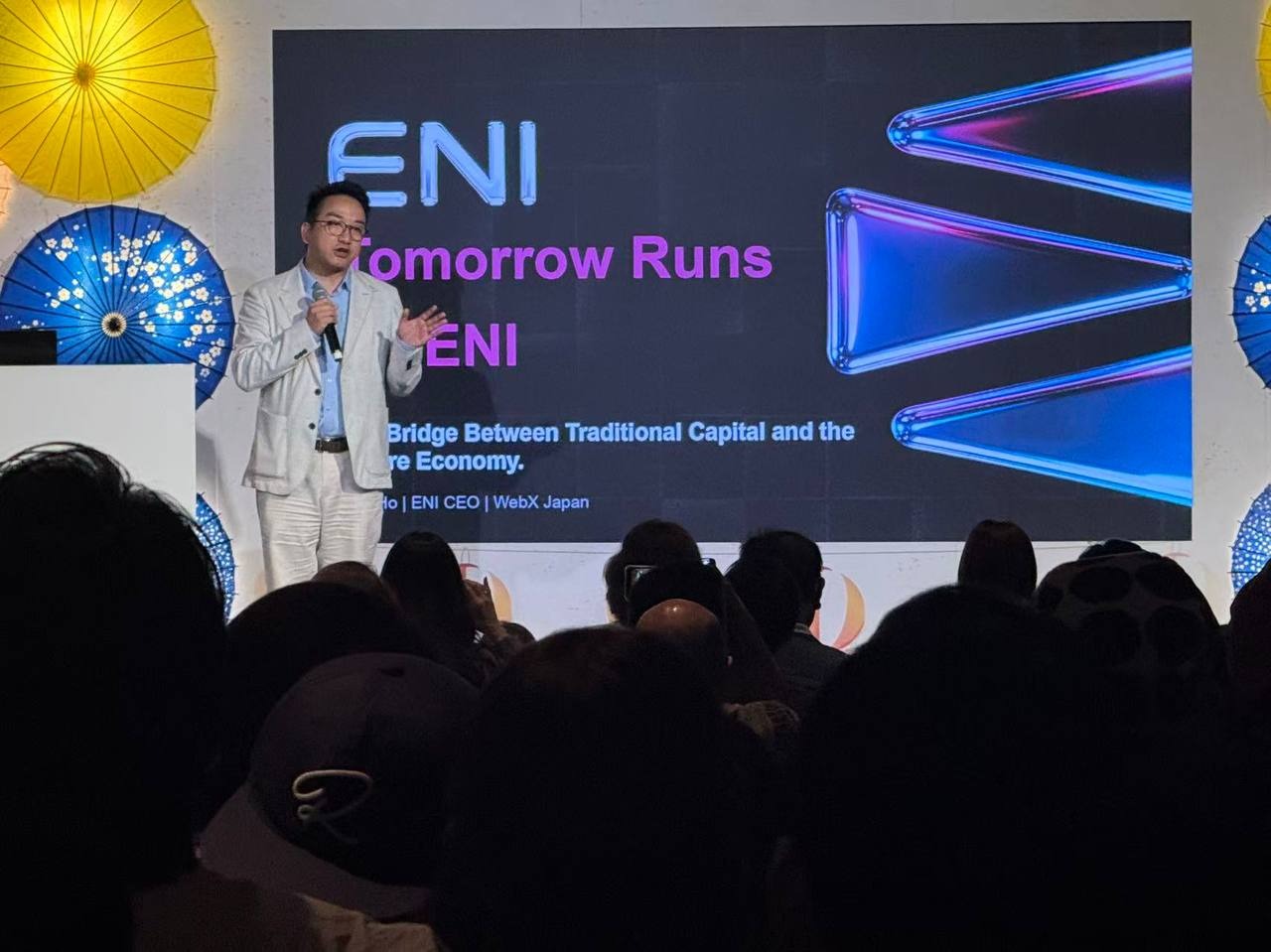
At WebX, Arion delivered a speech titled Tomorrow Runs on ENI: The Bridge Between Traditional Capital and the Future Economy. The speech presented a clear view that the next wave of Web3 growth may come from enterprises, listed companies, financial institutions, and traditional capital networks.
Over the past several years, public blockchains have competed primarily for Crypto native users, with developers, liquidity, and on chain assets forming the core of ecosystem growth. As infrastructure matures, the industry is facing a new question: how can Web2 enterprises use blockchain without completely changing their existing business systems? Enterprises need stable performance, clear permission boundaries, controllable business data, and compliance frameworks that can adapt to different jurisdictions. General purpose public blockchains struggle to meet all these requirements at once, while building an independent blockchain system involves high development and maintenance costs. This is why ENI has chosen an enterprise grade modular approach.
Within ENI Matrix, the Mainnet provides trust and settlement, the Hub connects assets and liquidity, and AppChain offers an independent business execution environment. Enterprises can deploy dedicated AppChains according to their business needs while gaining performance isolation, customized functionality, and cross chain collaboration within a unified architecture.
Arion described the system as the skeleton, body, and blood. The Mainnet, Hub, and AppChain form the skeleton. Institutions, enterprises, trading platforms, and Supernodes make up the body. Capital, users, assets, and business are the blood flowing through the network. This analogy reflects ENI's core logic. The technical architecture determines whether the network can operate, institutions and ecosystem partners determine where resources enter, and real business determines whether the network can generate long term value.
NTT Sends an Industry Signal
Japan is a distinctive Web3 market.
It has a mature capital market, a vast enterprise sector, and strict compliance requirements. For infrastructure projects focused on enterprise services, Japan represents both a potential market and a testing ground for technical and commercial capabilities.
One of the key parts of ENI's Japan visit was its participation in the official joint event with NTT.
As a Fortune Global 500 company in communications and information infrastructure, NTT serves a large number of enterprise clients and maintains extremely high standards for system stability, security, and compliance. ENI and NTT are collaborating on underlying infrastructure, with ENI providing its core protocol and high performance parallel computing capabilities to support the development of enterprise infrastructure compatible with ENI.
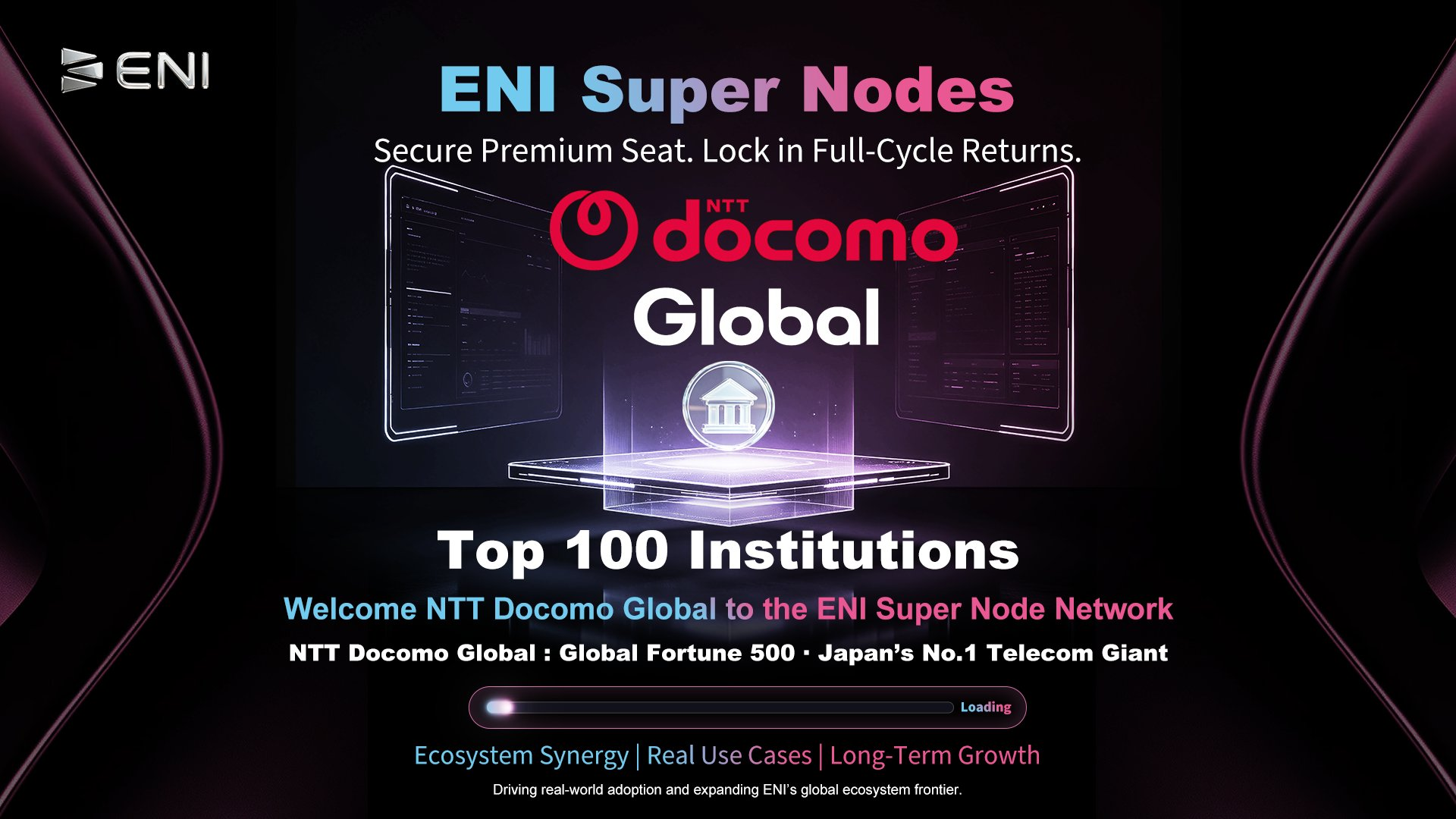
The signal from this collaboration deserves more attention than an ordinary ecosystem partnership.
When traditional enterprises select Web3 infrastructure, technical specifications are only one part of the evaluation. A partner's industry reputation, service capabilities, security standards, and ability to deliver over the long term also shape enterprise decisions. NTT's participation reflects a strong level of trust in ENI. If the two parties can develop a repeatable enterprise blockchain adoption solution in Japan, ENI will gain an implementation model that can be replicated in other markets. Experience spanning technical deployment, business migration, and regulatory alignment may then support Southeast Asia and other growth markets.
This is where Japan creates value for ENI: it allows the company to validate its product in a market with high standards, then take mature solutions into the broader Asian commercial network.
From Industry Exposure to Resource Entry Points
Web3 projects often gain brand exposure, investor access, and community growth by participating in major industry conferences. ENI's visit to Japan focused on another layer of value: attracting institutions and commercial resources that can participate in the ecosystem over the long term.
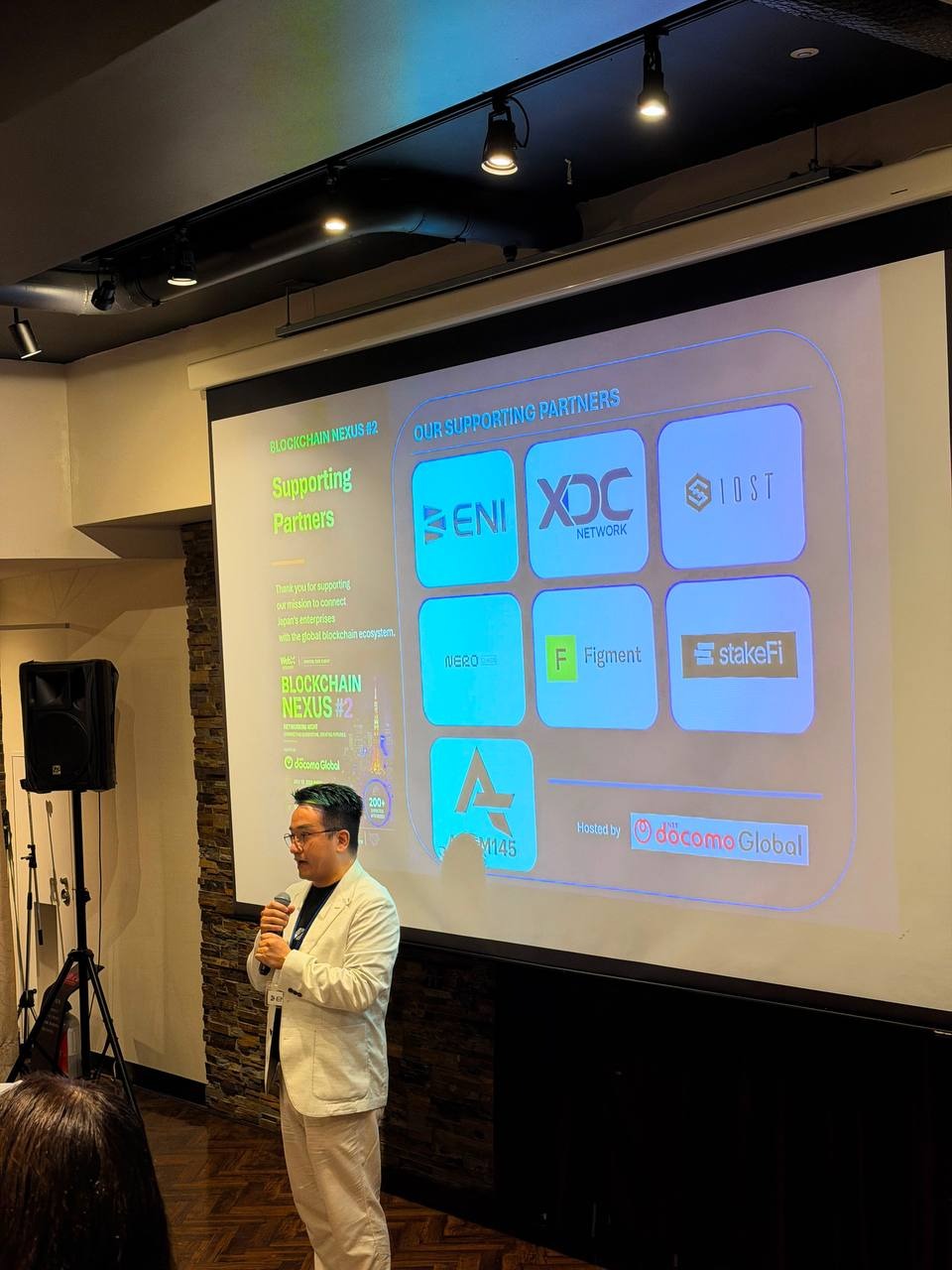
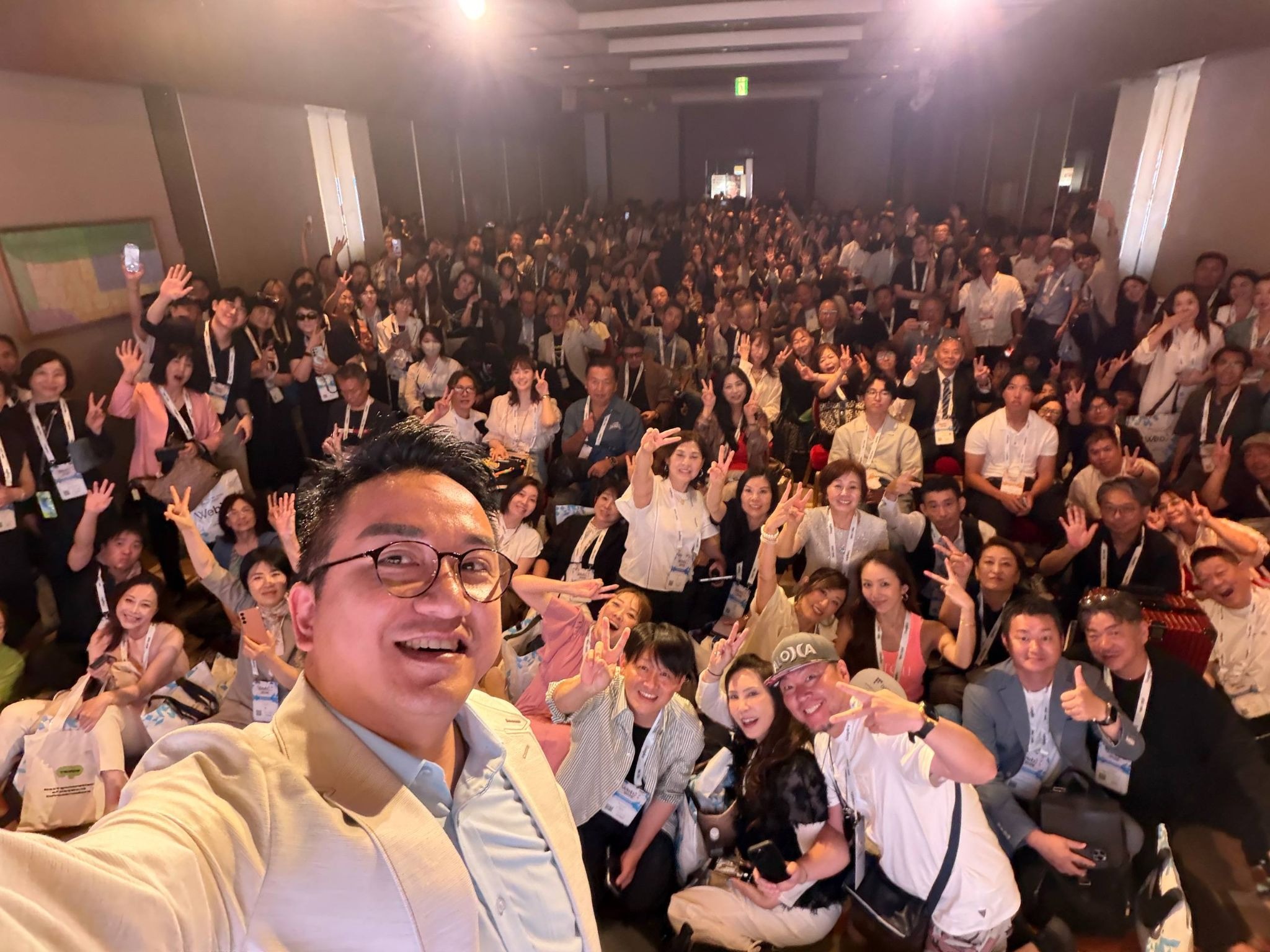
At ENI Community Night, ENI discussed enterprise blockchain use cases with community members, project teams, and potential partners. The event attracted more than 500 participants, with an enthusiastic audience actively joining the discussion under Arion's guidance. WebX VIP/Speaker Night and the official After Party created a more open environment for industry exchange, bringing together investment institutions, trading platforms, infrastructure teams, and Web3 entrepreneurs.
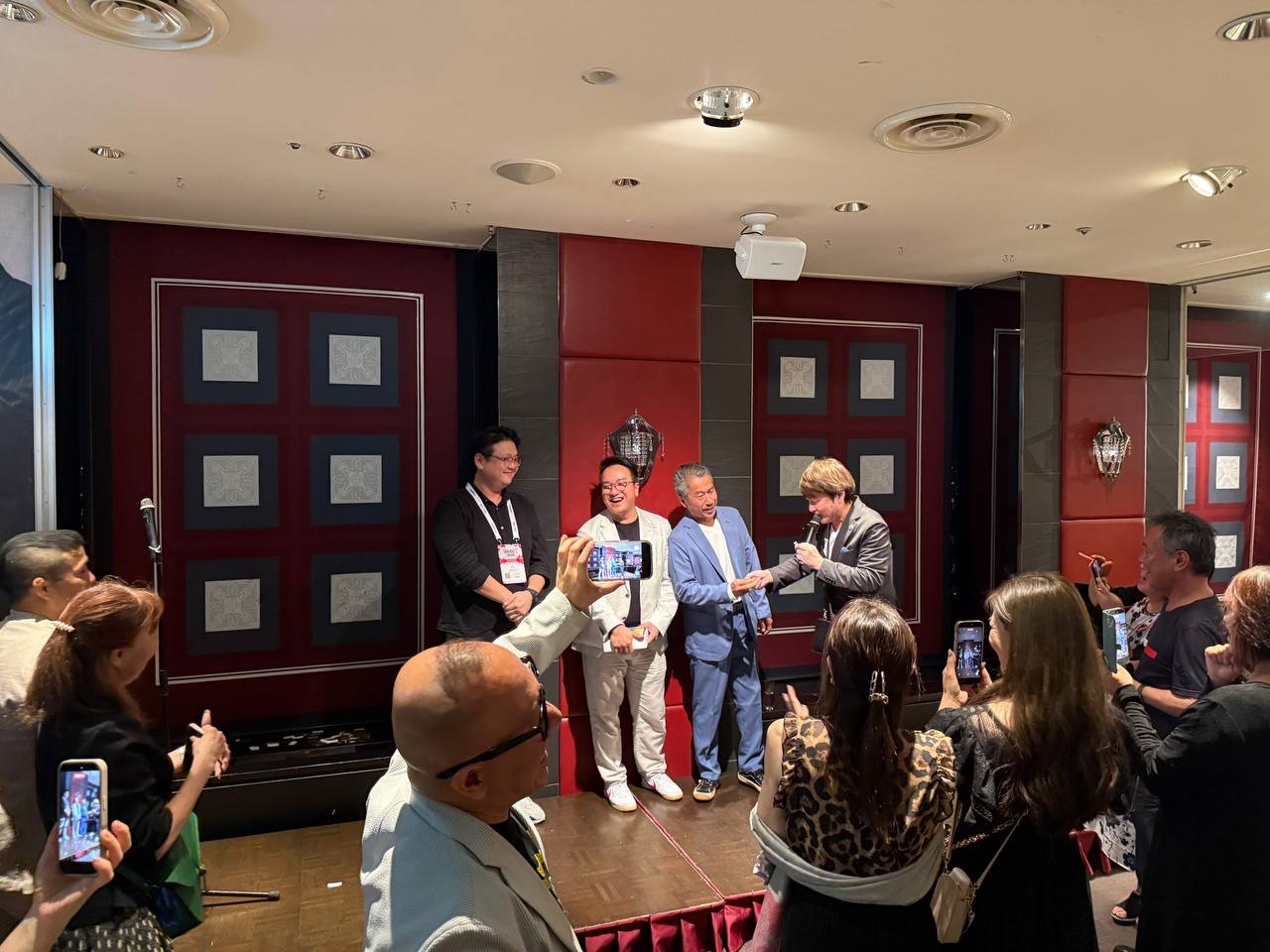
These activities may be difficult to connect to a specific business metric in the short term, but they are important to the early development of an ecosystem.
Institutions may become Supernodes or enterprise clients. Trading platforms and wallets can provide user and liquidity entry points, while the community supports early participation and market expansion. Once these different roles enter ENI, the network can begin building coordination among technology, assets, users, and business.
ENI is advancing a Supernode Matrix composed of one hundred leading institutions, one hundred leading exchanges, and one hundred leading ecosystem participants. Its goal is not simply to expand user numbers, but to bring participants with industrial resources, market channels, and institutional credibility into the same network.
How the Commercial Flywheel Turns
ENI calls its growth model the Commercial Resonance Flywheel.
The flywheel begins with institutions. Every institutional partner can become an entry point for assets, users, and commercial demand, bringing real business into the ENI network. Ecosystem projects can then serve those needs through on chain use cases covering payments, trading, supply chains, RWA, compliant financial technology, and enterprise applications.
As business activity increases, on chain transactions and network usage grow with it, supporting node rewards, business revenue sharing, and network value. Higher network value continues to attract institutions, trading platforms, and projects, creating a new cycle of growth. Whether this model works depends on one factor: whether real business can continue entering the network.
Many public blockchain growth flywheels rely on token incentives. Subsidies attract users, users bring TVL, TVL attracts projects, and projects continue distributing incentives. When the market enters a downturn, liquidity moves elsewhere and the flywheel can lose momentum quickly.
ENI aims to establish a different path. Institutions introduce assets and business, AppChain supports enterprise applications, trading platforms and wallets provide liquidity and user access, and Supernodes share governance responsibilities and business returns. Commercial demand drives network growth, while on chain activity becomes the result of business operations.
The Japan visit added new potential variables to this flywheel. Arion's WebX speech helped more investors and industry participants understand ENI's enterprise positioning. Collaboration with NTT strengthened trust from traditional industries, while community activities and industry exchanges brought project, capital, and channel resources.
The next point to watch is whether these relationships can become Supernodes, enterprise AppChains, on chain assets, and sustainable transactions.
For an enterprise grade modular blockchain, conference exposure is only the starting point. The speed of the Commercial Resonance Flywheel will ultimately depend on whether institutions enter the network, whether businesses move on chain, and whether assets and users continue to circulate through the ecosystem.
ENI has completed the first step of connecting resources in Japan. The next stage is to put those connections into motion.


All Comments