


A good look at one of NFTScan’s analytics focus points will take you to a new, innovative part of decentralized finance associated with NFTs known as “NFT-backed financing” or “NFT-Fi”. Users of the NFT borrowing and lending protocol have taken out loans totaling nearly $2.4 billion, according to NFTScan data. The market has taken note, and Binance has also moved into NFT lending. Now let’s venture into the world of browsers and lenders.

NFTScan NFT-Fi data: https://www.nftscan.com/nftfi
Decoding NFT-Backed Financing
NFT-backed financing, commonly referred to as “NFT lending,” is an innovative form of decentralized finance that enables individuals to leverage their non-fungible tokens (NFTs) as collateral for acquiring loans or lines of credit.
In this lending model, borrowers secure their loans by pledging NFTs as collateral, while lenders assess the NFT’s value based on market price and other relevant factors. If the NFT satisfies the lender’s criteria, the borrower can obtain a loan in the form of cryptocurrency or stablecoins. The borrower must repay the loan, along with interest, within a predetermined period. Failure to do so may result in the lender seizing the NFT collateral.
Tapping into the Potential of NFTs
One of the most significant challenges in the NFT space has always been liquidity, and NFT-backed financing is emerging as a groundbreaking solution for investors to access liquidity through the value of their NFT assets. With NFT lending, individuals seeking immediate liquidity can avoid selling their digital assets, particularly when market prices are unfavorable. This method offers numerous benefits over conventional lending models, such as reduced transaction fees, expedited approval times, and increased flexibility.
As NFT-backed financing gains popularity, it holds the potential to democratize access to capital, stimulate innovation by supporting creators and artists, and present new investment opportunities in the digital landscape. This financial model not only empowers individuals to unlock the value of their NFT assets but also contributes to the growth and development of the broader NFT ecosystem. By embracing NFT-backed financing, both borrowers and lenders can benefit from a more inclusive, efficient, and flexible lending experience in the ever-evolving digital world.
Navigating the Risks of NFT-Backed Financing
While NFT-backed loans present an opportunity to access additional liquidity from digital assets, they also carry substantial risks due to the inherent volatility of NFTs. A notable example from 2021 involves an “Elevated Deconstructions” NFT, which served as collateral for a US$12,000 loan. Initially valued at around US$39,600, the NFT’s worth skyrocketed to approximately US$300,000 within a month, following endorsements from celebrities like Snoop Dogg. Despite this increase in value, the borrower defaulted on the loan and ultimately forfeited the high-value NFT.
Such instances highlight the “lend-to-own” strategy adopted by some lenders to acquire potentially valuable NFTs if borrowers fail to repay their loans. However, lenders also face risks due to the volatile nature of the NFT market, where collateral value can fluctuate significantly during the loan term because of intangible factors like scarcity and shifting popularity. This was evident in 2022 when Bored Ape Yacht Club (BAYC) NFT prices plunged by 80% within six weeks. Borrowers who had over-leveraged themselves using their Apes as collateral for loans faced margin calls, a situation in which lenders demand additional collateral to account for the decreased value of the asset.
The prevalence of wash trading in the NFT market further complicates this landscape. This fraudulent practice, which is illegal in U.S. securities markets, involves an investor acting as both buyer and seller to artificially increase trading volumes and inflate prices. This issue extends beyond Ethereum and affects other blockchains such as Solana, Binance, Polygon, Cardano, Flow, and Arbitrum. These market distortions emphasize the need for a standardized valuation method that incorporates technological innovations like big data analytics, machine learning algorithms, and AI tools to deliver reliable and accurate NFT valuations, which are crucial for the stability and growth of NFT-backed financing.
Rapid Growth of Blend: Blur.io’s NFT Lending Platform
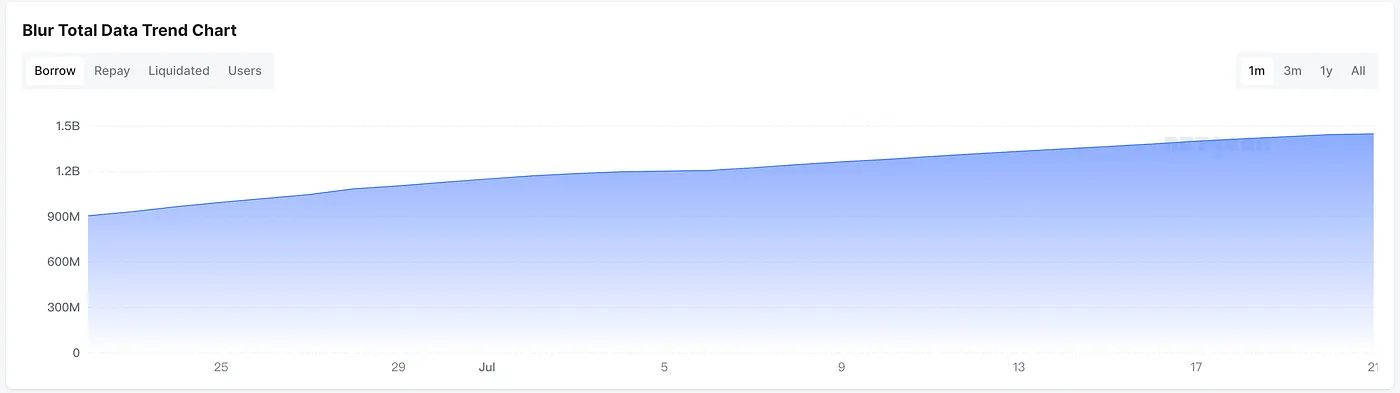
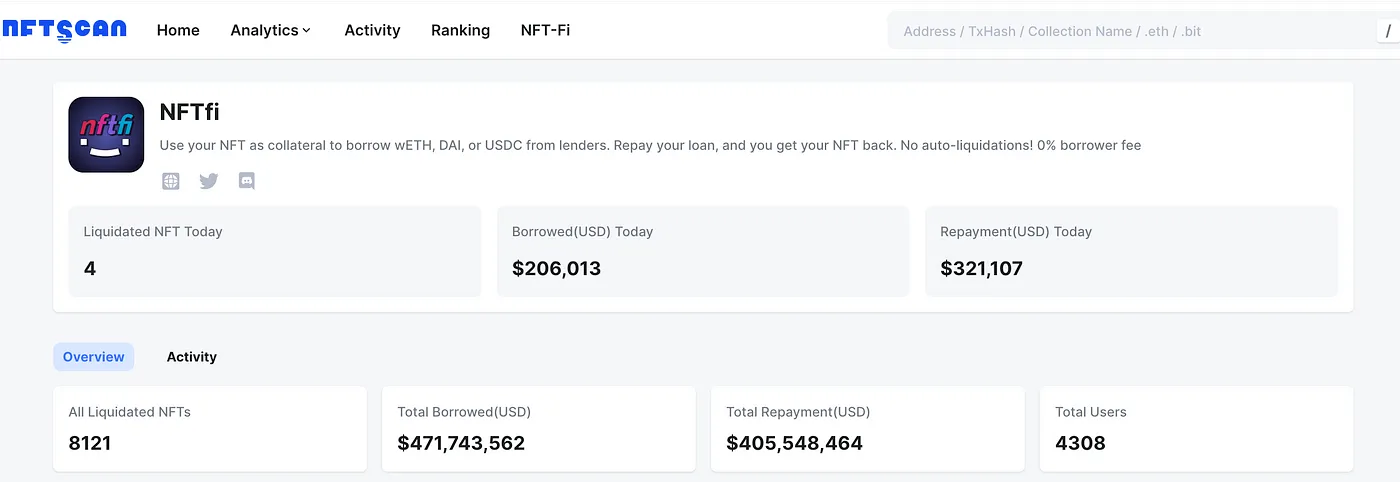
NFT marketplace Blur.io launched its peer-to-peer NFT lending platform, aptly named Blend, on May 1. In just one month, according to NFTScan data, the platform facilitated over $1.4 billion in loans (58.33% of loan volume in the whole ecosystem), significantly outpacing its closest competitor, NFTfi, which has an all-time loan volume of about $470 million.

What’s their secret?
Blend’s market share is expected to grow as it continues to expand its offerings. At present, the platform supports loans backed by four NFT collections: Miladys, Azukis, DeGods, and wrapped versions of CryptoPunks.However, Blur recently announced it would be launching lending for Clone X, and other projects are expected to be added in the near future.

This move to only give loans to blue-chip NFTs as collateral is one of the reasons why there are little or no liquidated NFTs in their lending protocol at the moment according to NFTScan Data.

When compared to NFTfi which offers variety NFT options as a means of collateral the reverse is the case.
Blend’s emergence in the NFT lending market follows Blur’s earlier success. According to analytics from NFTScan, Blur secured 45.22% of the NFT marketplace market share just a few months after its launch, quickly surpassing OpenSea to become the market leader. This was largely driven by Blur’s native token airdrop in Q1 2023, which resulted in a significant increase in Ethereum’s NFT trading volumes.
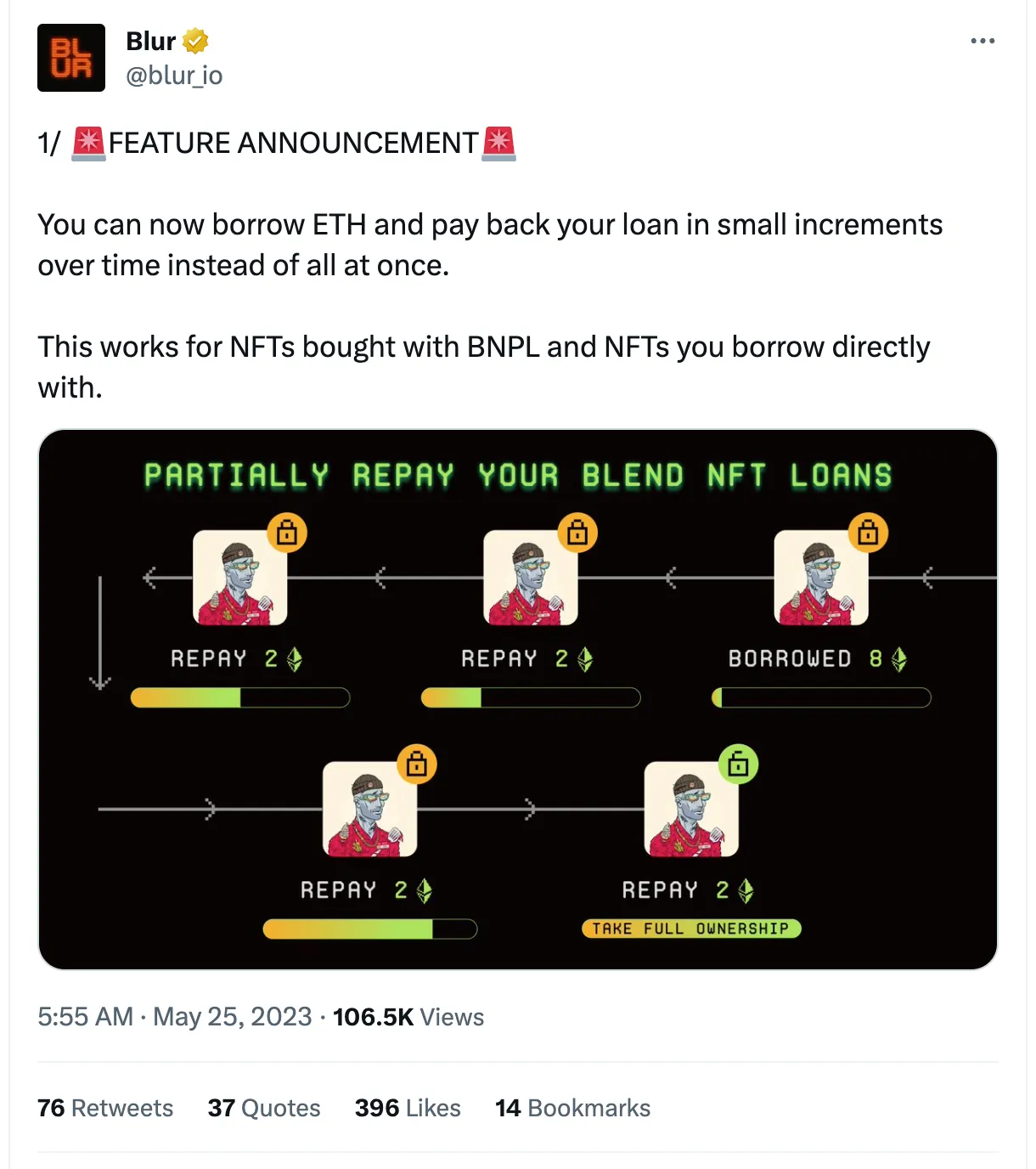
This strategic move is not only likely to retain existing users but also to continue to attract new participants to the platform. However, while Blend’s rapid ascension in the NFT lending market is undoubtedly impressive, it is important for participants to understand and navigate the inherent risks involved in using NFTs as collateral for loans.
Conclusion
The revolutionary potential that this Web3 invention holds for the future of finance must be taken into account as we traverse the terrain of NFT-backed funding.
By releasing liquidity, lowering entry barriers, and improving market efficiency, NFT-backed finance is advancing the usefulness of NFTs. As a result, it is anticipated to have a big impact on the continued advancement and uptake of NFTs in the upcoming years.
Although NFT financing is a relatively new idea in the world of finance, the emergence of platforms that allow people to lend or borrow money using NFTs as collateral has opened up new opportunities for financing, especially for those who might not have access to traditional forms of collateral.
About NFTScan
NFTScan is the world’s largest NFT data infrastructure, including a professional NFT explorer and NFT developer platform, supporting the complete amount of NFT data for 15 blockchains including Ethereum, Solana, BNBChain, Arbitrum, Optimism, and other major networks, providing NFT API for developers on various blockchains.
Official Links:
NFTScan: https://nftscan.com
Developer: https://developer.nftscan.com
Twitter: https://twitter.com/nftscan_com
Discord: https://discord.gg/nftscan


All Comments